Search for:

Comprehensive Practice Control is Gained Through Med Spa Software

In today’s competitive med spa industry, comprehensive practice control is essential for sustained success. Med spa software provides a unified solution that streamlines all aspects of operations, from client management to financial tracking. With a centralized platform, practitioners can optimize their practices with precision and efficiency, leading to improved service delivery and enhanced client satisfaction.

Streamlined Client Management

Med spa software centralizes client data, making it easy to manage appointments, medical histories, preferences, and payment information. By eliminating the need for manual record-keeping, this software reduces administrative overhead and potential errors.

  • Efficient Scheduling: Automated appointment reminders and real-time booking updates help ensure no double-bookings or missed appointments.
  • Personalized Client Experience: Comprehensive client profiles allow practitioners to tailor services, increasing customer satisfaction and loyalty.

Optimized Staff Workflow

Effective management of team members is vital for smooth operations. Med spa software enhances staff productivity by simplifying task assignments, shift scheduling, and internal communications.

  • Real-Time Collaboration: Team members can access up-to-date schedules, tasks, and client information instantly, promoting better coordination.
  • Task Automation: Administrative tasks like invoicing and inventory management are automated, freeing up staff time to focus on client care.

Financial and Performance Tracking

Med spa software provides easy access to financial and performance data, allowing owners and managers to make informed decisions. By tracking revenue, expenses, and client retention rates, the software supports better financial oversight and business growth.

  • Accurate Reporting: Detailed financial reports help managers understand revenue streams, identify trends, and make adjustments for growth.
  • Budgeting and Forecasting: With real-time data at hand, med spas can forecast future expenses and revenue, ensuring they stay on track with financial goals.

Simplified Compliance and Documentation

Adhering to industry regulations is crucial in the med spa industry. Med spa software simplifies compliance by automating documentation, ensuring that all client interactions, treatments, and transactions are properly recorded.

  • Regulatory Compliance: Software tools help ensures that all practices align with local regulations, minimizing legal risks.
  • Secure Documentation: Sensitive client data is stored securely, meeting privacy standards and safeguarding confidential information.

Scalability for Growth

As a med spa grows, maintaining control over expanding operations becomes more challenging. Med spa software enables scalability, offering customizable features that adapt to a growing client base and additional service offerings.

  • Adaptable to Growth: The software can scale with your practice, accommodating increased demand without compromising quality.
  • Multi-Location Management: For med spas with multiple branches, the software provides a centralized control system that can manage operations from various locations.

In conclusion, med spa software offers comprehensive practice control by improving client management, optimizing staff workflow, tracking financial performance, ensuring compliance, and supporting scalability. With the right software, med spas can enjoy a higher level of operational efficiency, leading to growth and sustained success.

Direct Buyers Promise Simplified Transactions With No Cleaning Or Staging Required

Direct Buyers Promise Simplified Transactions With No Cleaning Or Staging Required

Selling a home can feel stressful when extra steps add unnecessary pressure. Many owners hesitate because they think heavy cleaning or staging is required. Yet choosing a cash buyer for my house changes that entire process. It creates a simple path without demanding costly or time-consuming preparations.

Simplifying The Entire Selling Journey

Direct buyers streamline every stage, removing traditional listing requirements and stress. Homeowners skip expensive upgrades and long wait times altogether. This method creates a fast and reliable transaction with far fewer complications.

  • Transactions close in a matter of days
  • No open houses or property showings needed
  • Buyers accept homes in current condition
  • Paperwork handled with professional precision

This approach removes barriers and makes selling much less complicated for homeowners.

Is The Sale Process Stressful?

Not when direct buyers are involved. Sellers avoid constant home showings and cleaning routines. The process is smoother because buyers already expect properties as-is. That makes it easier for sellers who want less hassle.

Faster Closings Without Extra Demands

One of the greatest advantages is closing speed with no added burden. Traditional sales can drag on for months with countless steps. Direct buyers can finalize the purchase within days, creating instant relief.

  • Skip weeks of unnecessary property preparation
  • Avoid staging expenses for professional decorators
  • Bypass long mortgage approval waiting periods
  • Quick access to sale proceeds upon closure

This efficiency allows sellers to plan their next steps quickly and confidently.

Do Buyers Expect Repairs?

No, they don’t expect them. Direct buyers generally purchase homes exactly as they stand. That eliminates pressure on sellers to fix damaged areas. It allows people to walk away from the property with ease.

Convenience Comes First For Sellers

Convenience is the driving reason many sellers prefer direct buyers today. They do not need to impress anyone through design or staging. With here, buyers focus on property value instead of presentation or perfection.

  • Sellers gain freedom from renovation deadlines
  • Offers remain unaffected by outdated interiors
  • Buyers prioritize land and structure value
  • Transactions center around fair property assessment

The deal works smoothly when sellers are free from unnecessary obligations.

Can It Work For Anyone?

Yes, absolutely. It applies whether the home is new or outdated. Families, individuals, and even landlords can sell directly without hesitation. Buyers provide flexibility that fits many different selling circumstances.

Ending Stress Through Simplicity

Direct buyers eliminate unnecessary steps that complicate traditional property transactions. By skipping cleaning and staging, sellers save valuable time and money. This process makes real estate selling faster, simpler, and far more accessible for homeowners.

In Foreclosure? Sell Your House Fast for Cash

In Foreclosure? Sell Your House Fast for Cash

Foreclosure is stressful and overwhelming. On short notice, selling your house for cash may be the greatest way to prevent financial ruin. Fast cash transactions eliminate waiting, costly repairs, and unsure buyers. If you need to act quickly, expert cash purchasers make foreclosure exit easy. Trusted Raleigh companies like Cash House Closers in Raleigh can help homeowners close fast and move on without delays.

Why sell your foreclosure house fast?

If mortgage payments are late, you lose your home. Waiting too long can cause:

  • Credit score damage
  • Building debt and fees
  • Evictions are stressful.

Selling your house for cash can avert foreclosure and restore control. Quick and easy, cash purchasers buy homes “as-is,” without repairs or cleaning. This saves time and money.

Selling your house for cash offers quick closing, allowing for transactions in days rather than months.

  • No Repairs: Sell the house as-is.
  • No Repairs Needed: No realtor commissions or hidden fees.
  • Reduced Stress: Avoid long paperwork and negotiations.
  • Sales guarantee: No buyer backout.

Cash Sales: How Do They Work?

  1. Contact Cash Buyer

Contact us with property specifics.

  1. Get an Offer Fast

The buyer inspects your home and provides a fair cash price within 24–48 hours.

  1. Accept the Offer

The buyer handles most paperwork after agreement.

  1. Close Quickly

The transaction can conclude in a week, giving you cash fast.

Common Foreclosure House Selling Questions

Can I sell my foreclosed house?

You can sell your home before foreclosure. Better deals are possible if you act early.

Get a fair price?

Cash purchasers bid competitively on market value and condition. Though cheaper than a regular sale, speed and convenience make up for it.

Should I improve the house before selling?

Selling to cash buyers requires no repairs or cleaning. The offer covers repairs.

Act Now to Avoid Foreclosure Stress

Fast cash home sales help prevent foreclosure. It is practical for financial security and eviction prevention. Selling swiftly and simply can provide you piece of mind when time is short.

Conclusion

You might consider selling your property quickly for cash if it is in need of some restoration or if you do not wish to deal with the aggravation that is associated with typical sales. In a short period of time, it will give you with money and will avoid the process of foreclosure from occurring. Cash buyers, who buys fixer uppers in raleigh, are able to acquire properties in any condition, allowing homeowners to move on with their lives without enduring financial or emotional strain.

No Repairs, No Hassle: Why Sell Your Wilmington Home for Cash?

No Repairs, No Hassle: Why Sell Your Wilmington Home for Cash?

When you think about selling your property, you might picture endless maintenance, difficult showings, and long discussions. A lot of homeowners in Wilmington find the standard selling process scary, especially when they have a short deadline, are under financial pressure, or have a house that requires a lot of maintenance. But what if there was a simpler, more direct way? Meet the Wilmington cash house buyer, who offers a better option that puts speed and ease ahead of traditional problems. It will look at the many benefits of selling your Wilmington cash house buyer and explain why it could be the best option for you.

The Old Way of Selling: A Common Problem

Selling a house usually takes a lot of time and money. First, you have to get the property ready for the market by cleaning, tidying, and frequently making big repairs or upgrades. This might entail spending thousands of dollars up front with no promise of getting that money back or speeding up the transaction. Then there are the showings, open houses, and the need to keep your property spotless for possible buyers all the time. When you finally get an offer, it usually comes with conditions like inspections, appraisals, and finance approvals.

Why Cash Sales Are So Appealing: They’re Easy and Quick

  • No repairs needed: This is perhaps the best thing about it. Cash purchasers usually buy homes “as is,” which means you don’t have to spend time or money on expensive repairs, small maintenance, or even just cleaning.
  • Quicker Closings: Lender approvals and a lot of paperwork may slow down regular purchases. Cash transactions, on the other hand, don’t need an intermediary. Cash purchasers may close on homes in a matter of days or weeks, which is in line with your chosen timetable.
  • Less uncertainty and more surety: A cash offer indicates precisely that: a definite offer with money on hand. This gets rid of the worry that the buyer’s finance may fall through at the last minute. Most cash offers don’t have many, if any, conditions, which makes the closing process smoother and more predictable.
  • No Commissions or Fees: If you sell your house through a real estate agent, you usually have to pay a fee, which may be a large proportion of the sale price. Cash purchasers usually don’t charge commissions or hidden costs, which means you get to retain more of the money from the transaction.

When is a cash sale a good idea in Wilmington?

A cash sale isn’t only for houses that are in trouble; it’s a good option for a lot of scenarios. A cash buyer is a quick way to get out of a bad situation if you have to move for a new job on short notice, are facing foreclosure, are going through a divorce, are dealing with an inherited property, or just want to escape the hassle of the regular market. It gives you a quick and easy way to move on without the long-term anguish and money loss of a traditional sale. You may go to https://www.borntobuyhouses.com/wilmington-de/ to learn more about a hassle-free cash offer for your property and how easy it can be to sell your home.

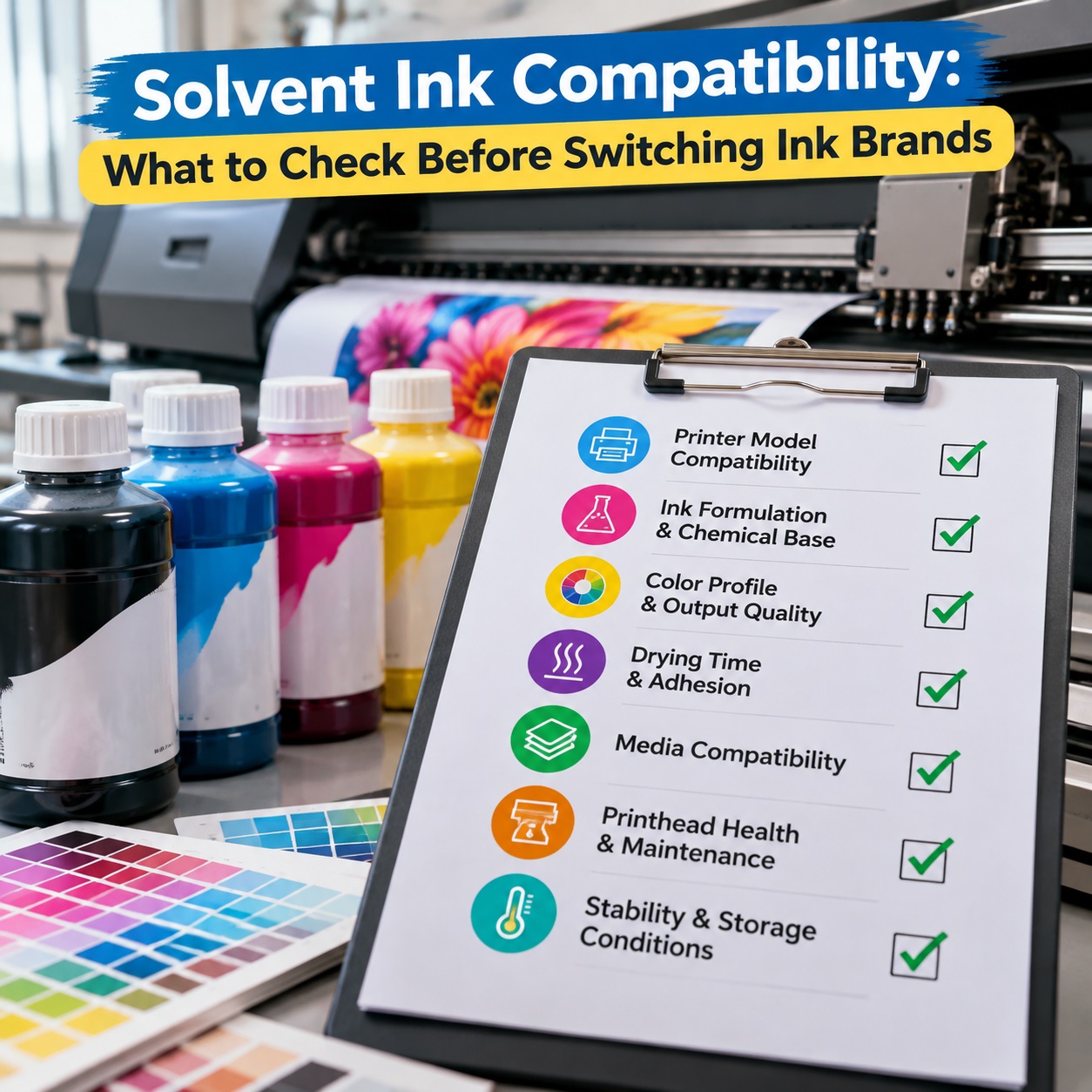
Solvent Ink Compatibility: What to Check Before Switching Ink Brands


Buying UV InkA cheaper solvent ink can be the most expensive thing you ever put in your printer.

I have watched a sign shop save thirty-eight dollars a liter and spend four thousand two hundred replacing a printhead six weeks later. The ink was not necessarily bad. The switch was. Compatibility is not a checkbox on a spec sheet. It is a chain of chemical, mechanical, and workflow decisions that either hold together or fail inside your machine.

Start With the Printhead, Not the Price List

Your printhead is the first thing that will tell you the truth. Solvent inks differ in viscosity, surface tension, particle size, and how aggressively they attack the internal coatings and adhesives inside a piezo head. Two inks can both be called eco-solvent and still behave nothing alike. If your printhead is under warranty, find out exactly what third-party ink does to that warranty. Some manufacturers will walk away the moment a non-approved cartridge or bulk ink hits the lines. Ask the ink supplier for a printhead compatibility list that names your exact model, not a vague family name. If they cannot produce one, that is not a technical gap. That is a warning.

Look at the Whole Ink Path

The printhead gets the attention, but the ink travels through tubing, dampers, O-rings, filters, capping stations, wipers, and pumps before it ever reaches a nozzle. A new solvent blend can swell a tube, harden a wiper, or soften a damper. The printer may run beautifully for a week and then start dropping pressure because a five-dollar part failed. Ask what materials the ink is compatible with and what the supplier recommends for replacement intervals. If you are switching from a mild eco-solvent to a more aggressive solvent, expect more maintenance, not less. That cost belongs in your calculation.

The Solvent Package Is the Fingerprint

Eco-solvent, low-solvent, true solvent, mild solvent. These labels are marketing shorthand, not chemistry. What matters is the actual solvent package: evaporation rate, flash point, odor, and how the ink cures on your substrate. A fast solvent might dry before it causes smudging, but it can also dry in the nozzles during a short pause. A slow solvent might keep the head clean but force you to slow the printer down or add dryer capacity. Check your ventilation, your shop temperature, and your typical print speed. An ink that works in a climate-controlled production room may fail in a garage with the door open.

Resin and Pigment Decide What Happens After the Print Leaves the Printer

Adhesion is only the beginning. You also need flexibility, scratch resistance, chemical resistance, and outdoor durability. A banner ink that passes a tape test may still crack when it is folded. A vehicle wrap ink may look fine until it meets a pressure washer. Ask for test data on the exact substrates you use most: uncoated vinyl, banner, backlit film, canvas, rigid board. Then test it yourself. Do not assume that because an ink is compatible with your printer, it is compatible with your customer’s expectations.

Do Not Mix Old and New Ink Unless the Supplier Puts It in Writing

Even when two inks are described as compatible, mixing them can cause gelling, sediment, or nozzle clogs. The safe move is to flush the system completely, replace filters, and start fresh. Get the supplier’s recommended flush procedure in writing. Some inks require a specific cleaning solution, not a generic one. Some require multiple flushes with a dwell time. If you skip that step, you may blame the new ink for a problem you created during the changeover.

Color Is Not Plug-and-Play

A new ink brand will almost always shift your color. It may have a wider gamut, a narrower gamut, or a different gray balance. Your old ICC profiles are now guesswork. You will need to linearize, re-profile, and check ink limits. Budget time, media, and a color management person if you do not do it in-house. If you print brand colors or contract proofs, run those first. A slight red shift that nobody notices on a banner can become a rejected job on a retail display.

Run a Real Trial, Not a Nozzle Check

A nozzle check proves the head fires. It does not prove the ink works. Run a trial on one printer, or one ink channel if you can isolate it. Flush according to the supplier’s instructions. Change filters. Fill with new ink. Then print daily nozzle checks for at least a week. Print test charts. Measure color. Test adhesion with tape, scratch, water, abrasion, and UV if possible. Track nozzle dropout, drop volume, filter pressure, and waste ink. Keep a log. If the ink fails, you want data, not a feeling.

Ask the Supplier the Uncomfortable Questions

A good ink supplier will welcome a technical conversation. Ask for the technical data sheet, the safety data sheet, the compatibility matrix, the recommended flush, ICC profiles, and references from shops that run your printer model. Ask about batch-to-batch consistency, shelf life, storage temperature, and what happens if a batch is off. Ask who supports you when something goes wrong at 2 a.m. before a deadline. If the answers are vague, the price per liter is irrelevant. You are not buying ink. You are buying uptime.

Compare Cost per Sellable Print

The cheapest ink is rarely the cheapest decision. Add flushing solution, filters, downtime, wasted media, reprints, color profiling, service calls, and the risk of a printhead replacement. Divide that by the number of sellable prints you produce. That number is the only one that matters. A slightly more expensive ink that runs clean for months can beat a bargain ink that costs you one reprint a week.

Plan the Switch Like a Production Change

Do not switch on a Friday before a major job. Do not switch every printer at once. Start with one machine. Label the tanks. Train the operators. Update the RIP. Keep a rollback plan. Document what you changed and when. If something goes wrong, you want to isolate the ink as a variable, not wonder whether it was the profile, the media, or the weather.

The right solvent ink brand does more than match your printer. It matches your substrates, your customers, your workflow, and your tolerance for risk. If a supplier hands you a compatibility sheet and offers to help with the trial, that is a good sign. If they just quote a price per liter and wish you luck, keep your old ink in the machine a little longer.

Chemical Protective Suits for Acid and Alkali Handling: What Buyers Need to Know


Chemical Protective Coverall Most acid burns on a plant floor don’t happen because nobody wore protection. They happen because someone bought the wrong protection, and nobody found out until the suit was already wet on the inside.

If you’re the person signing the purchase order for chemical protective suits, that sentence should bother you a little. Here’s what actually separates a suit that works from one that just looks like it does.

START WITH THE CHEMICAL, NOT THE CATALOG

The single most common mistake is shopping by brand or price before writing down what’s in the tank. Sulfuric acid at 98 percent, 50 percent caustic soda, and a 10 percent hydrochloric rinse are three completely different problems. So is the temperature. So is the concentration. So is whether the exposure is a splash, a spray, a pressurized jet, or a slow drip on a sleeve over an eight-hour shift.

Get the safety data sheet. Then get the specific concentration and temperature range, because permeation data changes dramatically with both. A suit that holds for eight hours against 30 percent sulfuric acid may give you twenty minutes against the same acid at 70 percent.

PERMEATION AND DEGRADATION ARE NOT THE SAME THING

Vendors throw these two words around like they’re interchangeable. They aren’t.

Degradation is what you can see: swelling, softening, cracking, color change, a material going gummy. Permeation is what you can’t see. It’s the chemical moving through the material at a molecular level, with no visible sign on either side. A suit can look factory-fresh and still be passing acid vapor through to your skin.

When you ask for chemical resistance data, ask for permeation breakthrough times, not just a pass-fail chart. A breakthrough time above 480 minutes is what you want for a full shift. Anything under 60 minutes means that suit is for incidental splash only, and you should say so out loud to whoever wears it.

Also ask whether the data was generated on the fabric alone or on the finished garment. Seams, zippers, and visors fail before panels do.

THE TYPE RATING IS THE FLOOR, NOT THE CEILING

European standards classify suits by the kind of exposure they handle. Type 6 is a light mist. Type 5 is dry particles. Type 4 is liquid spray. Type 3 is a liquid jet. Types 1 and 2 are gas-tight and non-gas-tight full encapsulation.

Here’s the trap: a supplier can legally sell you a Type 6 suit as “chemical protective” when your process involves a hose that occasionally lets go. Type 6 is not built for that. Match the type to the worst realistic scenario at your site, not the average day. If you handle acid in open containers, you’re in Type 3 or Type 4 territory, full stop.

MATERIALS: A FAST CHEAT SHEET

PVC is cheap, tough, and decent against many inorganic acids and bases. It’s heavy, stiff in cold weather, and struggles with many solvents.

Neoprene handles acids and caustics well and offers better flexibility and abrasion resistance than PVC. A solid all-rounder for chemical plants.

Butyl is a specialist. Excellent against many gases and vapors, strong acid resistance, but it’s expensive and not the most breathable option.

Nitrile shines against oils, greases, and many solvents, with moderate acid performance. Good for mixed chemical environments.

Laminated film suits (the lightweight, brightly colored ones) offer broad chemical resistance with very low weight. The trade-off is mechanical strength. They tear. If your workspace has sharp edges, grating, or scaffolding, plan for that.

PTFE and Viton are for the nasty stuff, aggressive solvents and concentrated acids, and you’ll pay accordingly.

There is no universal suit. Anyone who tells you otherwise is selling, not advising.

SEAMS ARE WHERE SUITS DIE

You can have the best fabric on the market and still get soaked through a stitched seam. Stitched seams are fine for dry particle protection. For liquids, you need seams that are taped, welded, or heat-sealed, and you need to verify how they were tested.

Ask this question directly: “Were the seams permeation-tested, or just the fabric?” The silence that follows tells you a lot.

ZIPPERS, FLAPS, AND THE FORGOTTEN GAPS

A zipper is a hole with teeth. Good suits cover it with a double storm flap, and the flap needs to sit over the zipper, not under it. Check the wrist and ankle closures too. Elastic cuffs are convenient and leaky. If you’re handling liquid acid, you want gloves that attach over the sleeve, not under it, and boots or overboots that integrate with the leg.

Face protection matters more than people admit. A hood with a rigid visor beats a soft hood plus safety glasses, especially when the hazard is a spray rather than a splash.

FIT: THE UNCOMFORTABLE TRUTH

Too-small suits tear at the shoulders. Too-large suits catch on equipment and drag through puddles. Both cause heat stress, which causes people to unzip, which defeats the entire purchase.

Buy for the largest and smallest person on the crew, not the average. If you’re buying encapsulating suits, consider whether you need a cooling vest or supplied air. A worker who overheats in twenty minutes is not protected, no matter what the label says.

DISPOSABLE OR REUSABLE? RUN THE MATH

Disposables win when contamination is high, decontamination is unreliable, or the chemical degrades the material quickly. Reusables win when the hazard is consistent, the suit can be properly cleaned, and the material holds up over many cycles.

The number that matters is cost per safe use, not cost per suit. A forty-dollar disposable worn once is more expensive than a three-hundred-dollar reusable that survives twenty clean cycles, provided your decontamination process actually works. If it doesn’t, the reusable is a liability with a longer lifespan.

PAPERWORK YOU SHOULD DEMAND

Before you sign anything, ask for: the full permeation test report with chemical names, concentrations, and breakthrough times; the type certification with the notified body number; the manufacturing batch or lot number; shelf life and storage conditions; and decontamination instructions specific to the material.

A certificate of conformity with no test data behind it is a decoration. Treat it that way.

STORAGE AND SHELF LIFE QUIETLY KILL SUITS

Laminated films and elastomers degrade in sunlight, heat, and ozone. A suit that sat in a hot warehouse for three years is not the suit that passed the test. Store them flat, cool, dark, and away from electric motors. Date everything. Rotate stock.

TRAINING IS PART OF THE PRODUCT

The best suit on the market fails if the wearer puts it on wrong. Train donning and doffing separately, because doffing is where contamination happens. Teach people to check for pinholes, degraded seams, and stuck zippers before every use. Teach them what to do if they feel a tingle or a burn through the fabric. That tingle is a permeation event, and it means get out now, not finish the task first.

QUESTIONS THAT SEPARATE GOOD SUPPLIERS FROM ORDER TAKERS

Will you review our SDS and recommend a specific suit for each chemical? Can you provide permeation data at our actual concentration and temperature? What’s your return or replacement policy if the suit fails inspection out of the box? Do you offer sizing support and training materials? How long have you been supplying this industry?

A supplier who answers all five without hesitation is worth a premium. One who deflects to a brochure is not.

WHAT IT COMES DOWN TO

Nobody remembers the money they saved on a cheap suit. They remember the incident report. Buy for the chemical, verify with data, fit for the human being, and hold your supplier to documentation standards you’d accept for any other piece of safety-critical equipment.

The suit is the last barrier between a bad day and a catastrophe. Treat the purchase like it.

Convention Center Parking Access Makes Large Events Easier To Navigate

Large events become more enjoyable when visitors can reach their destinations without unnecessary confusion. Convenient parking access helps attendees organize their arrival, manage their schedules, and begin the event with confidence. A little preparation makes it easier to understand available options and enjoy a smooth experience from arrival to departure.

Understanding Parking Entry Points

Knowing where to enter and how to reach suitable parking areas can save valuable time during busy events. Reviewing parking information before departure allows visitors to make informed choices and approach arrival procedures with greater confidence.

  • Review entrance details: Check available access points before starting the journey.
  • Follow directional signs: Use clearly marked guidance to locate appropriate parking areas.
  • Allow additional time: Prepare for increased traffic during popular event sessions.
  • Choose suitable spaces: Consider walking distance and individual accessibility requirements.
  • Keep information ready: Store parking details where they can be checked conveniently.

Improving Arrival and Navigation

A well-organized arrival plan helps visitors move through busy surroundings more comfortably. When parking arrangements are considered in advance, attendees can spend less time making last-minute decisions and more time enjoying the event’s activities.

  • Plan the arrival schedule: Leave early enough to accommodate parking and entry procedures.
  • Check event timings: Coordinate parking plans with registration and session schedules.
  • Identify meeting points: Select convenient locations for friends, colleagues, or family members.
  • Prepare payment options: Review applicable parking charges and accepted payment methods.
  • Consider alternative spaces: Keep another suitable parking option available if the preferred area is full.

Selecting Convenient Parking Arrangements

Different visitors have different parking needs depending on their schedules, mobility requirements, and length of attendance. Comparing available arrangements helps people choose options that provide comfort, accessibility, and practical access to event facilities.

Useful information about https://www.aplusexpo.com/mandalay-bay-convention-center-parking/ can support advance preparation by helping visitors review parking-related details before planning their event visit.

  • Evaluate walking distances: Choose spaces that offer convenient access to event entrances.
  • Review vehicle restrictions: Check any applicable height limits or parking conditions.
  • Consider accessibility: Look for appropriate facilities that support individual mobility needs.
  • Match parking to duration: Select arrangements that suit the expected length of the visit.
  • Remember the location: Note the parking section, level, or nearby identifying signs.

Making Departures More Efficient

Parking convenience remains important after an event finishes. Large gatherings can bring many visitors to their vehicles at similar times, so preparing a departure plan helps attendees leave in an orderly and comfortable manner.

  • Record the parking location: Save a quick note to find the vehicle easily.
  • Follow exit directions: Use designated routes to support smooth traffic movement.
  • Gather belongings early: Organize personal items before reaching the vehicle.
  • Coordinate group departures: Agree on a meeting point and suitable departure time.
  • Remain considerate: Follow parking rules and allow other vehicles to move safely.

Creating a Better Event Experience

Accessible parking arrangements contribute to a positive experience by reducing uncertainty and supporting efficient movement. With thoughtful preparation, clear directions, and practical parking choices, visitors can navigate large events more confidently. These simple habits help make arrivals smoother, departures easier, and the entire event experience more comfortable and enjoyable.

Specialized Courses Support Continuous Improvement In Machine Safety Knowledge

Specialized learning programs give employees valuable opportunities to strengthen machine safety knowledge and build practical confidence. Continuous education helps teams stay familiar with responsible procedures, recognize opportunities for improvement, and maintain positive safety practices throughout their professional responsibilities.

Strengthening Core Safety Knowledge

A strong understanding of machine safety principles provides a useful foundation for responsible equipment operation. Specialized courses can present essential concepts in a structured format, helping participants develop clear and practical knowledge.

  • Understand fundamental machine safety principles
  • Learn the importance of responsible equipment operation
  • Develop awareness of safe working procedures
  • Strengthen knowledge through structured lessons
  • Build confidence in everyday responsibilities

Developing Practical Understanding

Practical learning helps participants connect theoretical knowledge with workplace activities. Guided exercises can make important safety concepts easier to understand while encouraging careful and consistent application.

  • Explore safety procedures through practical activities
  • Apply learned concepts to realistic situations
  • Develop stronger observation skills
  • Practice responsible decision-making
  • Reinforce knowledge through repeated learning

Improving Hazard Awareness

Recognizing potential hazards is an important part of maintaining effective machine safety practices. Specialized education encourages participants to observe equipment and work areas carefully while developing a proactive approach to safe operations.

  • Identify common machine-related hazards
  • Improve awareness of surrounding work conditions
  • Understand the value of preventive measures
  • Encourage careful workplace observation
  • Support proactive safety thinking

Encouraging Continuous Improvement

Continuous improvement becomes easier when employees regularly update their knowledge and review established practices. Ongoing education can help teams discover better approaches while maintaining a strong commitment to responsible machine use.

  • Refresh important safety knowledge regularly
  • Review established procedures consistently
  • Explore opportunities for safer work practices
  • Encourage constructive learning discussions
  • Support gradual improvements in daily operations

Supporting Confident Equipment Practices

Employees who understand equipment safety principles can approach their responsibilities with greater confidence. Specialized courses provide useful learning opportunities that encourage careful preparation, responsible operation, and consistent attention to safety requirements.

  • Learn appropriate equipment preparation methods
  • Understand the importance of routine checks
  • Encourage careful equipment handling
  • Strengthen confidence through guided learning
  • Promote consistent operating habits

Building Effective Team Communication

Machine safety benefits from clear communication and shared understanding. Training sessions encourage employees to discuss safety topics, exchange observations, and develop consistent approaches to workplace responsibilities.

  • Share useful safety observations
  • Encourage clear communication among team members
  • Discuss practical safety considerations
  • Promote consistent understanding of procedures
  • Strengthen teamwork through collaborative learning

Supporting Professional Development

Specialized machine safety education can contribute to valuable professional growth. Learning opportunities such as Machineveiligheid training Haarlem can help participants expand their knowledge, improve practical awareness, and develop skills that support responsible workplace performance.

Reinforcing Long-Term Safety Culture

Regular learning can make safety awareness a lasting part of everyday operations. When teams continuously develop their knowledge, they become better prepared to apply responsible practices and support positive workplace standards.

  • Encourage regular knowledge development
  • Reinforce positive safety habits
  • Maintain awareness of changing responsibilities
  • Promote learning as an ongoing activity
  • Support a culture of continuous improvement

Specialized courses create a strong pathway for developing and maintaining machine safety knowledge. Through structured education, practical learning, teamwork, and ongoing development, employees can strengthen their confidence and contribute to efficient, responsible, and well-organized machine operations.

Preventive Roofing Programs Support Consistent Performance And Reduced Disruptions

A proactive approach to roof care can help maintain dependable protection while supporting long-term building performance. Preventive roofing programs combine scheduled inspections, routine maintenance, and timely improvements to keep roofing systems functioning efficiently and reduce unexpected interruptions.

Regular Inspections Promote Roof Health

Scheduled inspections provide an opportunity to review the condition of important roofing components before maintenance needs become more significant. Consistent attention helps property owners understand roof performance and plan suitable care.

  • Inspect roofing surfaces at planned intervals.
  • Review seams, flashing, and protective details.
  • Examine drainage areas for proper function.
  • Check visible roof penetrations carefully.
  • Document maintenance needs for future planning.

Planned Maintenance Supports Reliability

Routine maintenance helps preserve roofing materials and keeps essential components working effectively. A structured schedule allows suitable tasks to be completed at appropriate times, supporting consistent performance throughout the year.

  • Keep drainage pathways clear.
  • Maintain clean roofing surfaces.
  • Review seals and connections regularly.
  • Address minor maintenance needs promptly.
  • Replace worn components when appropriate.

Early Attention Helps Prevent Disruptions

Roofing Contractors

Timely maintenance can help identify developing concerns while they remain manageable. Addressing small requirements through planned service supports a smoother maintenance process and helps maintain dependable roofing protection.

  • Monitor changes in roofing conditions.
  • Address minor surface concerns early.
  • Review areas exposed to regular weather conditions.
  • Maintain protective details around openings.
  • Schedule suitable repairs before needs increase.

Improving Long-Term Roof Performance

Preventive programs can support the useful life of roofing systems through consistent care. Regular attention helps materials perform as intended while keeping the entire system organized and prepared for ongoing service.

  • Protect important roofing components.
  • Maintain effective water management.
  • Support consistent surface performance.
  • Preserve drainage functionality.
  • Encourage continued structural protection.

Organized Maintenance Planning

A structured roofing program makes it easier to coordinate inspections and maintenance tasks. Organized scheduling can help property owners prepare for routine services while maintaining a clear understanding of upcoming requirements.

  • Establish recurring inspection schedules.
  • Prioritize important maintenance tasks.
  • Keep service records organized.
  • Plan seasonal roofing activities.
  • Coordinate maintenance with building needs.

Supporting Energy Efficiency

Well-maintained roofing systems can contribute to comfortable and efficient building environments. Proper insulation, surface condition, and ventilation can work together to support consistent indoor conditions and responsible energy use.

  • Maintain suitable insulation performance.
  • Keep ventilation pathways functioning effectively.
  • Preserve reflective roofing surfaces where applicable.
  • Support stable indoor temperatures.
  • Review energy-related roofing improvements.

Exploring Preventive Roofing Options

Understanding available maintenance approaches can help property owners create programs suited to their roofing systems. Professional guidance can provide useful information about inspection schedules, routine care, and long-term maintenance planning.

  • Review the current roof condition.
  • Identify suitable inspection intervals.
  • Discuss recommended maintenance activities.
  • Consider seasonal service requirements.
  • Learn More about preventive roofing solutions.

Building Consistent Roofing Performance

Preventive roofing programs provide a practical foundation for dependable building protection. By combining regular inspections, planned maintenance, organized scheduling, and timely attention, property owners can support roofing performance while reducing unnecessary disruptions. A proactive maintenance approach also creates greater confidence in the condition of the roofing system. Consistent care can preserve valuable materials, support efficient building operation, and encourage a cleaner, more reliable roof environment for the long term.

Pneumatic Systems Provide Efficient Automated Fluid Movement Solutions

Reliable fluid movement is essential for maintaining smooth and productive industrial operations. Pneumatic systems support automated control by using compressed air to create precise mechanical movement. Their efficient operation, responsive performance, and flexible configurations make them valuable for applications that require consistent fluid regulation and dependable automation. Discover reliable flow control solutions through https://www.vincervalve.com/pneumatic-actuated-valve/ technology designed for efficient industrial operations.

Efficient Automated Fluid Control

Pneumatic technology converts compressed air into controlled mechanical movement, allowing valves to open, close, or regulate fluid flow with impressive consistency. This approach supports streamlined processes while reducing the need for continuous manual intervention.

  • Enables fast and responsive valve operation
  • Supports consistent fluid flow management
  • Simplifies repetitive control requirements
  • Improves overall process efficiency
  • Encourages dependable automated operation

Reliable Performance Across Applications

Modern pneumatic systems can accommodate different operating conditions through suitable valve designs, actuator configurations, and control arrangements. Their adaptable nature helps create efficient solutions for diverse fluid-handling requirements.

  • Supports different flow control needs
  • Handles frequent operational cycles effectively
  • Provides dependable movement during automation
  • Offers flexible actuator configurations
  • Promotes stable process performance

Precision Improves Process Management

Accurate control is an important advantage of pneumatic automation. Carefully coordinated air pressure and mechanical movement allow systems to achieve controlled valve positioning, helping maintain predictable flow and supporting smooth operational results.

  • Enables precise opening and closing
  • Supports controlled flow adjustment
  • Helps maintain consistent process conditions
  • Improves repeatability during automated cycles
  • Provides responsive mechanical movement

Safety-Focused Pneumatic Operation

Pneumatic systems can provide valuable safety benefits because compressed air powers the actuator movement. Suitable fail-safe configurations can also help valves move toward a predetermined position when the air supply changes, supporting controlled system responses.

  • Supports dependable emergency positioning
  • Reduces reliance on continuous manual control
  • Enables controlled responses during interruptions
  • Encourages safer automated operation
  • Supports organized process management

Flexible System Integration

Pneumatic components can be arranged according to specific operational requirements. Different valve styles, actuator types, connection methods, and accessories allow designers to create practical automation systems that fit varied process conditions.

  • Accommodates multiple valve arrangements
  • Supports compact and efficient installations
  • Allows actuator selection based on requirements
  • Simplifies integration with control equipment
  • Provides adaptable automation possibilities

Durability Supports Long-Term Efficiency

Strong construction and suitable material selection can help pneumatic equipment maintain dependable performance through demanding operating cycles. Consistent functionality contributes to productive processes and supports efficient maintenance planning.

  • Encourages reliable long-term operation
  • Supports repeated automated movements
  • Helps maintain consistent performance
  • Reduces unnecessary operational interruptions
  • Promotes efficient equipment utilization

Smarter Fluid Movement Through Automation

Pneumatic systems combine speed, precision, flexibility, and reliable mechanical action to improve automated fluid movement. By selecting appropriate valve arrangements and actuator configurations, operations can achieve smooth control while supporting productivity and process consistency. As automation continues to advance, pneumatic solutions provide a practical foundation for efficient fluid management, helping create organized, responsive, and dependable industrial processes.

Better Bathroom Comfort Through Thoughtful Plumbing Updates

A comfortable bathroom can make everyday routines feel easier, cleaner, and more enjoyable. Thoughtful plumbing updates can improve water flow, fixture performance, drainage, and overall convenience without changing the character of the space. With practical improvements and regular care, homeowners can create a bathroom that supports relaxing mornings, refreshing evenings, and dependable daily use.

Improve Everyday Water Flow

Consistent water flow helps every bathroom activity feel more convenient. Updated plumbing components can support dependable performance while making sinks, showers, and other fixtures easier to use.

  • Steady water pressure
  • Smooth faucet operation
  • Reliable shower performance
  • Efficient fixture connections
  • Convenient temperature control

Well-maintained supply lines and connections can also contribute to a more dependable bathroom experience.

Create Smoother Drainage

Efficient drainage is another important part of bathroom comfort. Slow-moving water can interfere with routines, while clear drainage pathways help wastewater move away efficiently.

hopkinsville plumber

Helpful updates may include:

  • Clearing accumulated buildup
  • Improving drain performance
  • Inspecting drainage connections
  • Addressing recurring slowdowns
  • Maintaining clean drain pathways
  • Checking accessible pipe sections

Regular attention can help keep bathroom drainage functioning smoothly and consistently.

Upgrade Fixtures For Convenience

Modern fixture improvements can bring useful comfort into everyday routines. Replacing worn components or updating frequently used fixtures can make the bathroom feel more efficient and pleasant.

Consider improvements such as:

  • Comfortable shower fixtures
  • Easy-to-use faucets
  • Efficient toilet components
  • Durable sink connections
  • Convenient shutoff valves
  • Reliable water supply fittings

When fixtures operate properly, simple tasks become easier and the entire room can feel more welcoming.

Support Efficient Plumbing Performance

Thoughtful plumbing maintenance can also help improve household efficiency. A qualified hopkinsville plumber can provide professional assistance with repairs, fixture updates, drainage concerns, and other plumbing needs while helping maintain dependable bathroom performance.

Professional attention can support:

  • Careful plumbing inspections
  • Timely fixture repairs
  • Reliable pipe connections
  • Improved water flow
  • Better drainage function
  • Practical maintenance solutions

These services can help homeowners enjoy greater confidence in their bathroom systems.

Add Preventive Plumbing Care

Preventive attention can make bathroom upkeep simpler over time. Small signs such as dripping faucets, slow drains, unusual sounds, or changing water pressure can provide useful reminders that a plumbing inspection may be beneficial.

Helpful maintenance habits include:

  • Checking faucets for drips
  • Cleaning fixture aerators
  • Monitoring drain speed
  • Inspecting visible connections
  • Keeping drains free of debris
  • Checking accessible valves regularly

Consistent care can help preserve fixture performance and support a pleasant bathroom environment.

Enjoy Greater Bathroom Comfort

Thoughtful plumbing updates can transform ordinary bathroom routines into smoother, more comfortable experiences. From dependable water flow and efficient drainage to well-functioning fixtures and preventive maintenance, each improvement can contribute to a more enjoyable home.

By combining practical updates with regular professional care, homeowners can support lasting plumbing performance, maintain household convenience, and create a bathroom that feels comfortable and dependable throughout every season.

Sensor Interference Can Influence Seemingly Independent Lighting Activity

Sensor interference can influence seemingly independent lighting activity by causing unexpected switching, brief illumination, or repeated cycling. Understanding how sensors respond to movement, temperature changes, light levels, electrical conditions, and nearby equipment can make unusual behavior easier to understand. Careful observation and simple adjustments can often improve lighting performance.

Understanding Sensor Responses

Motion sensors commonly detect changes in infrared energy, while photocells respond to surrounding light levels. Because these sensors react to environmental changes, activity that appears unrelated to the fixture can sometimes influence when lighting activates.

  • Sensors respond to environmental changes
  • Motion can activate detection zones
  • Temperature changes may affect infrared sensing
  • Light reflections can influence photocells
  • Proper positioning supports reliable operation

Nearby Light Can Affect Detection

A sensor may respond to illumination from nearby fixtures or even light produced by its own fitting. Reflected light can alter what a photocell perceives, while heat or illumination around a motion sensor can contribute to unexpected activity.

  • Check surrounding light sources
  • Observe reflective surfaces near sensors
  • Keep sensor views appropriately positioned
  • Prevent direct fixture light from reaching photocells
  • Consider nearby illumination during adjustments

Electrical Interference Matters

Electrical conditions can also influence sensor-controlled lighting. Equipment sharing a circuit may introduce switching effects or electrical interference, while an unsuitable sensor and LED combination can contribute to flickering or unusual behavior.

  • Check whether multiple devices share a circuit
  • Consider motors and transformers nearby
  • Confirm sensor compatibility with LED loads
  • Observe whether behavior changes after equipment starts
  • Seek qualified electrical assistance for wiring concerns

Temperature Changes Influence Sensors

Temperature differences can affect infrared detection because motion sensors respond to changes in heat patterns. Seasonal conditions, warm airflow, ventilation, and other temperature variations may therefore influence activity even when no person is nearby.

  • Observe behavior during different temperatures
  • Keep sensors away from strong heat sources
  • Check airflow around the detection area
  • Adjust sensitivity when appropriate
  • Keep sensor lenses clean

Positioning Supports Better Performance

Correct sensor placement can make detection more predictable. A sensor aimed toward the intended activity area, with unnecessary movement and reflective influences minimized, can provide a more controlled lighting response.

  • Aim sensors toward desired activity zones
  • Avoid unnecessary movement in detection areas
  • Reduce exposure to direct environmental changes
  • Keep the detection path appropriately focused
  • Review placement when behavior changes

Helpful Troubleshooting Steps

When lighting activates unexpectedly, observing the exact pattern can provide useful clues. Resources such as https://www.wosenled.com/why-do-my-led-lights-turn-on-by-themselves/ can offer additional guidance for understanding possible sensor-related causes.

  • Note when unexpected activation occurs
  • Check sensitivity settings
  • Inspect the sensor lens
  • Observe nearby light and heat sources
  • Reset or test the fixture according to its instructions

Creating Reliable Lighting Activity

Sensor-based lighting can provide convenient, responsive illumination when detection settings and environmental conditions work together. Understanding potential interference makes it easier to fine-tune positioning, sensitivity, and surrounding conditions for consistent performance. With thoughtful observation and appropriate adjustments, seemingly independent lighting activity can become easier to understand. Proper sensor placement, suitable settings, compatible components, and awareness of surrounding conditions can support dependable illumination while making automated lighting more convenient and responsive.

Launching Operations with Essential Jet Ski Rental Business Planning

A successful jet ski rental operation begins with organized planning, reliable equipment, clear procedures, and a strong commitment to customer safety. Building a practical foundation before opening can create smoother daily operations and help entrepreneurs prepare for changing demand, maintenance needs, and customer expectations. A detailed guide such as https://www.hiseadock.com/jet-ski-rental-business/ can also support broader planning around the business model.

Define The Business Structure

A clear business concept makes every later decision easier. Start by identifying the rental format, customer experience, fleet size, operating schedule, and service standards.

  • Choose hourly rental options.
  • Consider half-day packages.
  • Plan full-day rental choices.
  • Define customer eligibility.
  • Establish straightforward pricing.
  • Set clear rental conditions.
  • Prepare customer documentation.
  • Create consistent service standards.

A written business plan should also estimate equipment expenses, insurance, maintenance, staffing, permits, storage, safety supplies, and working capital.

Prepare The Fleet

Equipment selection directly affects reliability and customer satisfaction. A carefully maintained fleet can support efficient scheduling while reducing avoidable interruptions.

  • Select dependable watercraft.
  • Inspect every unit regularly.
  • Schedule preventive maintenance.
  • Maintain detailed inspection records.
  • Keep essential replacement parts.
  • Prepare cleaning procedures.
  • Check fuel levels consistently.
  • Document equipment condition.

Pre-operation and post-operation checks are valuable parts of a structured rental routine, particularly for hulls, propulsion components, steering systems, and related equipment.

Build Strong Safety Procedures

Safety should be integrated into every customer interaction. Clear instructions help renters understand operating expectations before they begin their experience.

  • Provide appropriate life jackets.
  • Conduct detailed safety briefings.
  • Explain operating boundaries.
  • Review starting procedures.
  • Demonstrate emergency stopping.
  • Explain communication procedures.
  • Monitor weather conditions.
  • Maintain emergency plans.
  • Keep rescue equipment accessible.

Formal operating guidance also emphasizes documented procedures, emergency preparation, weather checks, equipment inspections, and suitable safety instruction.

Complete Business Requirements

Before accepting customers, identify the approvals and insurance requirements that apply to the intended operation. Requirements can differ according to jurisdiction and operating conditions.

  • Verify business registration.
  • Check watercraft requirements.
  • Confirm commercial permissions.
  • Review insurance coverage.
  • Maintain required documentation.
  • Understand customer eligibility rules.
  • Review employment requirements.
  • Keep permits organized.

Confirming these matters early can help create a confident launch process and prevent unnecessary operational delays.

Create Efficient Daily Operations

A repeatable workflow keeps customer service organized from arrival through return.

  • Confirm reservations efficiently.
  • Verify required customer forms.
  • Complete equipment inspections.
  • Deliver safety instructions.
  • Track rental start times.
  • Monitor equipment returns.
  • Inspect returned watercraft.
  • Clean equipment promptly.
  • Record maintenance needs.

Support Long-Term Growth

Once operations begin, tracking utilization, maintenance patterns, customer feedback, and recurring expenses can reveal opportunities for steady improvement. A strong planning process makes expansion easier because additional equipment, staff, and services can be introduced according to demonstrated demand.

  • Review performance regularly.
  • Improve customer communication.
  • Maintain equipment standards.
  • Strengthen safety practices.
  • Track operating expenses.
  • Evaluate fleet utilization.
  • Refine rental packages.
  • Plan sustainable expansion.

A thoughtful combination of preparation, safety, equipment care, customer service, and financial organization can create a strong foundation for a rewarding jet ski rental business.

Bakery Packaging Ideas For Attractive And Practical Product Presentation

Bakery products become even more appealing when their packaging combines visual charm with everyday functionality. Thoughtfully designed boxes, bags, sleeves, and containers can protect delicate treats while creating an inviting presentation. The right packaging also supports convenient handling, storage, gifting, and takeaway experiences.

Window Boxes for Product Visibility

Clear-window boxes create an attractive presentation by allowing customers to view baked goods before opening the package. This approach works especially well for products where decoration, texture, and color contribute to their appeal.

  • Showcase pastries without opening the package.
  • Highlight decorative toppings and detailed finishes.
  • Encourage attractive product presentation on counters.
  • Provide convenient visibility during selection.
  • Support elegant gifting and takeaway presentation.

Practical Bakery Bags

Bakery bags offer a lightweight solution for bread, pastries, cookies, and similar products. Their flexible construction makes them convenient to carry while providing an organized way to package individual or multiple items.

  • Choose suitable sizes for different baked goods.
  • Use sturdy structures for dependable handling.
  • Add convenient openings for quick access.
  • Consider gusseted designs for improved capacity.
  • Support simple and comfortable takeaway use.

Creative Boxes for Special Treats

Specialty boxes can give cakes, rolls, cupcakes, and delicate pastries a polished appearance. Different shapes and structural features can be selected according to product dimensions, helping maintain both presentation and practicality.

  • Select dimensions that fit products comfortably.
  • Use supportive structures for delicate creations.
  • Add handles for easier carrying when appropriate.
  • Consider compartments for multiple individual treats.
  • Create distinctive shapes for memorable presentation.

Attractive Sleeves and Wrappers

Sleeves and wrappers provide another opportunity to enhance bakery presentation while keeping packaging streamlined. They can complement boxes and containers, adding visual detail without making the overall package feel complicated.

  • Use sleeves to create a refined outer layer.
  • Coordinate patterns with the product presentation.
  • Add simple decorative elements for visual interest.
  • Choose practical materials for easy handling.
  • Combine sleeves with boxes for added presentation value.

Functional Design for Everyday Convenience

Good bakery packaging should look appealing while supporting efficient handling. Practical openings, secure closures, suitable dimensions, and stable structures help make packaging easier to use from preparation through final consumption.

  • Select closures that keep packages securely positioned.
  • Match package dimensions to product size.
  • Provide enough room to protect decorative details.
  • Choose structures that stack neatly when suitable.
  • Prioritize easy opening and comfortable carrying.

Sustainable Packaging Concepts

Material selection can support attractive presentation while encouraging responsible packaging practices. Paper-based options and renewable material choices can provide useful alternatives while maintaining a clean and appealing appearance.

  • Consider recyclable paper-based packaging options.
  • Select renewable materials where suitable.
  • Reduce unnecessary packaging layers.
  • Use appropriately sized packages to limit excess material.
  • Combine sustainability with practical product protection.

Customization for Stronger Presentation

Customization can transform simple packaging into a distinctive presentation tool. Thoughtful choices in shape, printing, texture, and finishing can help create consistency across different bakery products.

  • Explore custom dimensions for specific products.
  • Use appealing patterns and visual elements.
  • Consider embossed details for added texture.
  • Select finishes that complement the product style.
  • Maintain consistent presentation across packaging formats.

Conclusion

Effective bakery packaging brings together appearance, protection, convenience, and thoughtful material selection. From window boxes and practical bags to creative sleeves and customized structures, each option can enhance the way baked goods are presented and enjoyed. For further ideas and packaging inspiration, explore https://www.yoonpak.com/bakery-packaging/ as a useful reference for bakery packaging concepts.