
Search for:

Exploring Technical Features of Modern Surge Protection Devices

Modern electrical systems require dependable protection to maintain smooth operation, support equipment performance, and improve overall electrical safety. Surge protection devices play an important role by managing unexpected voltage increases and helping safeguard connected equipment. With continuous improvements in electrical engineering, modern solutions offer advanced technical features that contribute to greater reliability, efficiency, and long-term system stability.

Advanced Voltage Protection Technology

One of the most valuable features of modern surge protection devices is their ability to respond rapidly to sudden voltage fluctuations. These devices are designed to limit excessive voltage and redirect unwanted surge energy, helping protect sensitive electrical components.

Important capabilities include:

  • Fast Response Time: Quickly reacts to transient voltage changes and supports dependable equipment protection.
  • Voltage Limiting: Helps maintain suitable voltage levels during electrical disturbances.
  • High Surge Capacity: Handles specified surge energy levels to strengthen overall protection.
  • Reliable Performance: Supports consistent operation across different electrical applications.

Intelligent Monitoring and Diagnostic Features

Modern designs increasingly incorporate monitoring capabilities that make electrical protection easier to manage. Visual indicators and diagnostic functions help users understand the operating condition of protective equipment.

Useful monitoring features include:

  • Status indicators that communicate protection availability.
  • End-of-life notifications that support timely maintenance.
  • Remote signaling options for convenient system supervision.
  • Diagnostic functions that simplify routine inspections.
  • Clear operating information that improves maintenance planning.

These features encourage proactive equipment management while supporting better operational visibility.

Flexible Design and Installation Advantages

Installation flexibility is another important characteristic of advanced surge protection technology. Compact construction and practical connection arrangements allow protective devices to integrate into different electrical distribution systems.

Several design advantages include:

  • Modular configurations for convenient replacement and servicing.
  • Space-efficient construction for organized electrical panels.
  • Multiple connection options for different installation requirements.
  • Clearly identified terminals for easier electrical connections.
  • Compatibility with suitable distribution arrangements.

Such features help create organized installations while supporting convenient maintenance and future system improvements.

Enhanced Safety and Operational Reliability

Modern surge protection devices are developed with carefully selected materials and engineered components to support dependable operation. Additional safety mechanisms contribute to controlled performance during demanding electrical conditions.

Valuable protective characteristics include:

  • Thermal disconnection mechanisms for improved operating safety.
  • Durable enclosures designed for suitable installation environments.
  • Insulation properties that support electrical separation.
  • Protective coordination with other electrical safety components.
  • Construction designed to meet relevant technical standards.

Choosing Devices With Suitable Technical Specifications

Selecting appropriate equipment requires understanding the electrical characteristics of the intended application. Reviewing technical documentation helps ensure that protective capabilities match installation requirements.

Important specifications to evaluate include:

  • Maximum continuous operating voltage.
  • Nominal discharge current.
  • Maximum discharge current.
  • Voltage protection level.
  • Short-circuit withstand capability.
  • Applicable protection type and installation category.

Exploring technical resources through https://lsp.global/fr/ can also help readers understand modern protection technologies and important product characteristics.

Conclusion

Modern surge protection devices combine responsive voltage management, intelligent monitoring, flexible installation, and dependable safety mechanisms. Their advanced technical features support improved electrical reliability and help protect valuable equipment from unexpected disturbances. By evaluating essential specifications and choosing suitable protective solutions, users can develop efficient electrical systems with greater confidence, durability, and long-term performance.

Apartments With Community Facilities for Leisure and Recreation

A comfortable apartment lifestyle becomes even more rewarding when residents have access to shared spaces designed for relaxation, fitness, and social activities. Developments such as one chuan grove highlight the importance of combining private living areas with thoughtfully planned community facilities. These spaces encourage residents to enjoy convenient recreational opportunities while creating meaningful connections with neighbours. From peaceful outdoor corners to energetic activity areas, community facilities can make everyday routines more enjoyable and fulfilling.

1. Recreational Spaces for Everyday Enjoyment

Well-designed recreational facilities provide residents with convenient opportunities to spend their free time. Having these spaces within the residential community makes leisure activities easier to include in everyday schedules.

  • Swimming Pools: Offer refreshing opportunities for relaxation, exercise, and enjoyable family activities.
  • Outdoor Gardens: Create pleasant surroundings for morning walks, quiet breaks, and peaceful conversations.
  • Walking Paths: Encourage regular movement while allowing residents to appreciate landscaped surroundings.
  • Children’s Play Areas: Provide dedicated spaces where younger residents can explore, play, and develop social skills.
  • Open Recreation Zones: Support casual gatherings, outdoor games, and enjoyable community activities.

2. Fitness Facilities That Encourage Active Living

Access to convenient fitness facilities can help residents maintain healthy routines without travelling far from home. Dedicated exercise spaces also make physical activities more accessible to different age groups.

  • Fitness Centres: Provide room for strength training, cardio exercises, and personal fitness routines.
  • Yoga Spaces: Encourage stretching, relaxation, mindfulness, and balanced daily habits.
  • Sports Courts: Allow residents to enjoy friendly matches and recreational games.
  • Cycling Areas: Support enjoyable outdoor exercise and regular physical movement.
  • Multipurpose Fitness Zones: Accommodate different activities according to residents’ interests.

3. Shared Spaces That Build Community Connections

Long-Term Property

Community facilities can bring residents together through comfortable environments designed for interaction. These shared areas create opportunities to develop friendships and enjoy memorable experiences.

  • Clubhouses: Offer welcoming settings for social gatherings, celebrations, and group activities.
  • Community Lounges: Provide comfortable places for conversations and informal meetings.
  • Event Areas: Support festive celebrations, hobby sessions, and neighbourhood gatherings.
  • Indoor Activity Rooms: Allow residents to enjoy games, creative interests, and recreational programmes.
  • Picnic Spaces: Encourage families and friends to spend quality time together outdoors.

4. Family-Friendly Facilities for Different Age Groups

A thoughtfully planned residential community considers the recreational preferences of different generations. Facilities that accommodate varied interests help create an inclusive living environment.

  • Toddler Play Corners: Provide suitable spaces for younger children to enjoy supervised activities.
  • Senior Relaxation Areas: Offer comfortable seating and peaceful surroundings for older residents.
  • Family Recreation Zones: Encourage parents and children to participate in activities together.
  • Indoor Games Areas: Create opportunities for enjoyable entertainment regardless of weather conditions.
  • Flexible Gathering Spaces: Accommodate celebrations, shared interests, and family occasions.

Conclusion

Community facilities for leisure and recreation add meaningful value to apartment living by supporting wellness, convenience, and stronger neighbourhood relationships. Access to thoughtfully maintained shared spaces encourages residents to explore different interests while enjoying quality time with family and friends. A balanced combination of fitness, relaxation, and social facilities can make residential environments more engaging and welcoming. Careful planning by the one chuan grove developer can further support a lifestyle where recreation, comfort, and community connections naturally become part of everyday living.

Smart Converting Technology Transforming Industrial Packaging Processes

Industrial packaging operations continue to advance through improved machinery, intelligent automation, and precision-driven production methods. Smart converting technology plays an important role in creating efficient workflows while supporting consistent output and flexible manufacturing requirements. Modern equipment helps businesses process different materials, maintain product quality, and achieve smoother production cycles. With carefully integrated systems, manufacturers can improve operational coordination and create packaging solutions that meet changing industry expectations.

Improving Production Efficiency Through Automation

Automated converting machinery simplifies several production activities by reducing manual involvement and improving process consistency. Intelligent controls allow operators to manage equipment settings with greater accuracy, supporting reliable performance throughout manufacturing operations.

Key advantages include:

  • Faster Processing: Automated functions support continuous material handling and help maintain steady production speeds.
  • Reduced Manual Work: Integrated mechanisms simplify repetitive tasks and allow employees to focus on essential operational activities.
  • Consistent Output: Precise equipment settings help maintain uniform results across different production batches.
  • Better Workflow Coordination: Connected machinery supports smoother transitions between individual manufacturing stages.
  • Improved Productivity: Efficient operating cycles help manufacturers make better use of available production time.

Enhancing Material Handling and Processing Accuracy

Material management is essential for achieving dependable converting results. Modern machinery incorporates advanced feeding, cutting, slitting, laminating, and rewinding capabilities that support accurate processing across various packaging materials.

These capabilities contribute to stronger production performance through:

  • Maintaining consistent material tension during processing.
  • Supporting accurate cutting dimensions and clean finishing.
  • Minimizing unnecessary material movement throughout operations.
  • Improving alignment during different converting stages.
  • Accommodating diverse material thicknesses and production specifications.

As manufacturers explore advanced solutions, resources available through https://www.ketegroup.com/es/ can provide additional insight into modern converting technologies and evolving packaging equipment capabilities.

Supporting Flexible and Adaptable Manufacturing

Changing packaging requirements encourage manufacturers to adopt machinery that offers greater operational flexibility. Smart converting systems allow production teams to adjust machine configurations according to specific material characteristics, product dimensions, and order requirements.

Important flexibility benefits include:

  • Versatile Applications: Equipment can support multiple converting processes and packaging formats.
  • Quick Adjustments: Convenient control settings help simplify production changeovers.
  • Custom Processing: Adjustable operating parameters accommodate different manufacturing specifications.
  • Scalable Operations: Flexible machinery supports production growth and changing output requirements.
  • Improved Resource Utilization: Adaptable systems help manufacturers organize materials and production schedules efficiently.

Strengthening Quality and Long-Term Performance

Advanced monitoring capabilities and precision-based controls contribute to dependable packaging production. By maintaining consistent operating conditions, smart machinery helps manufacturers achieve attractive finishes and reliable product dimensions.

Additional operational benefits include:

  • Real-time monitoring for improved process visibility.
  • Predictable performance across extended production cycles.
  • Efficient maintenance planning through equipment monitoring.
  • Better coordination between connected production units.
  • Reduced material waste through accurate processing controls.

Creating Smarter Packaging Production Environments

Smart converting technology brings together automation, precision, and adaptability to support progressive industrial packaging operations. By investing in capable machinery and organized production systems, manufacturers can strengthen productivity while maintaining consistent quality standards. Continuous technological improvements also encourage efficient resource management and smoother workflows. Ultimately, advanced converting solutions provide a valuable foundation for building productive, flexible, and quality-focused packaging operations that remain prepared for future manufacturing opportunities.

Quality Molecular Sieves Deliver Dependable Results Across Multiple Industries

Molecular sieves play an important role in modern industrial processes by supporting efficient separation, purification, and moisture removal. Their carefully structured pore systems provide reliable adsorption performance, helping industries maintain consistent product quality and improve operational efficiency. With excellent moisture control and selective adsorption capabilities, these materials contribute to dependable results across numerous applications.

Advanced Adsorption Technology Supports Industrial Efficiency

Molecular sieves are designed with uniform pore structures that selectively capture molecules according to their size and chemical properties. This capability makes them valuable materials for processes requiring precise separation and controlled moisture levels.

Their dependable performance provides several advantages:

  • Effective removal of unwanted moisture from gases and liquids.
  • Consistent adsorption performance across industrial applications.
  • Selective separation of different molecular components.
  • Reliable purification for improved product quality.
  • Efficient support for continuous processing requirements.

These characteristics help manufacturers achieve stable operations while maintaining the desired standards throughout their production activities.

Versatile Applications Across Multiple Industries

Different industries depend on molecular sieves to maintain product purity, improve processing conditions, and support specialized manufacturing requirements. Their adaptable properties make them suitable for various technical environments.

Common industrial applications include:

  • Petrochemical processing: Supports gas drying, hydrocarbon purification, and separation activities.
  • Natural gas treatment: Helps remove water and other unwanted components from gas streams.
  • Pharmaceutical manufacturing: Supports moisture control and purification during specialized production processes.
  • Chemical production: Improves material preparation through selective adsorption and drying.
  • Food and beverage processing: Assists with moisture management and controlled processing environments.

This versatility makes molecular sieves valuable materials for businesses seeking dependable solutions across different production sectors.

Different Molecular Sieve Types Offer Specialized Benefits

Various molecular sieve types provide distinct adsorption characteristics according to their pore dimensions and chemical composition. Selecting an appropriate structure helps industries achieve their desired processing objectives.

Important varieties include:

  • 3A molecular sieves: Provide selective water adsorption while allowing larger molecules to pass through.
  • 4A molecular sieves: Support moisture removal and general-purpose drying applications.
  • 5A molecular sieves: Enable selective separation of specific molecular components.
  • 13X molecular sieves: Offer larger pore structures for gas purification and broader adsorption requirements.

Each variety contributes valuable performance characteristics that support different industrial applications.

Consistent Quality Enhances Operational Performance

High-quality molecular sieves help maintain reliable processing conditions through their adsorption capacity, structural stability, and moisture-control capabilities. Choosing suitable materials supports consistent production outcomes and efficient resource utilization.

Important quality considerations include:

  • High adsorption capacity for effective moisture removal.
  • Uniform pore distribution for selective molecular separation.
  • Strong mechanical properties for handling durability.
  • Consistent particle characteristics for dependable operation.
  • Regeneration capability for repeated industrial use.

These qualities encourage efficient material utilization while supporting dependable performance throughout demanding applications.

Reliable Solutions Support Future Industrial Development

As industrial requirements continue to evolve, dependable adsorption materials remain essential for improving production quality and operational efficiency. Molecular sieves provide practical advantages through their versatility, selective adsorption, and consistent moisture-control performance. Exploring suitable material specifications through https://www.jalonzeolite.com/de/ can help businesses understand available molecular sieve solutions and their potential applications.

With appropriate selection, storage, and operating conditions, molecular sieves can deliver lasting value across diverse industrial processes. Their combination of precision, adaptability, and dependable performance makes them an important component in modern manufacturing and purification operations.

Identifying Early Warning Signs of Solenoid Valve Failure

Solenoid valves play an essential role in controlling fluid and airflow across automated equipment and industrial systems. Their reliable operation supports consistent performance, accurate flow regulation, and smooth production activities. Recognizing early warning signs of potential failure helps operators maintain efficiency, improve equipment reliability, and plan timely maintenance. By understanding common performance changes, businesses can support dependable operations and extend component service life.

1. Changes in Valve Response Time

One of the earliest indications of a solenoid valve issue is a noticeable change in its response time. A properly functioning valve should open and close according to its electrical control signals.

Common signs include:

  • Delayed opening or closing during operation.
  • Inconsistent switching between operating positions.
  • Slow responses to control signals.
  • Irregular movement during repeated operating cycles.

Identifying these changes early helps maintain accurate system performance.

2. Unusual Noise During Operation

Solenoid valves generally operate with predictable mechanical sounds. Unexpected noises can indicate developing performance concerns that deserve attention.

Operators should observe:

  • Excessive humming from the electrical coil.
  • Clicking sounds that differ from normal operation.
  • Vibrations during valve activation.
  • Repeated buzzing while the valve remains energized.

Regular observation helps identify unusual behavior before it affects connected equipment.

3. Leakage and Irregular Fluid Flow

Another important warning sign is leakage around valve connections or internal sealing components. Maintaining proper sealing supports efficient fluid management and consistent system operation.

Potential indicators include:

  • Visible leakage near valve connections.
  • Unexpected pressure fluctuations.
  • Reduced fluid delivery.
  • Inconsistent airflow or liquid movement.
  • Difficulty maintaining the required flow rate.

Inspecting seals, fittings, and internal components can help restore dependable performance.

4. Electrical Performance Changes

Electrical components are essential for reliable solenoid valve operation. Changes in electrical performance may affect the valve’s ability to respond correctly.

Important signs to monitor include:

  • Coil overheating during regular operation.
  • Intermittent electrical activation.
  • Damaged or loose wiring connections.
  • Irregular power supply performance.
  • Failure to activate when receiving a control signal.

Routine electrical inspections help maintain stable operation and support early troubleshooting.

5. Reduced Operating Efficiency

A solenoid valve experiencing performance difficulties may influence the efficiency of an entire system. Monitoring operating conditions makes it easier to recognize gradual changes.

Watch for these indicators:

  • Increased operating cycle times.
  • Inconsistent pressure regulation.
  • Unexpected interruptions.
  • Reduced equipment responsiveness.
  • Greater energy consumption than expected.

Understanding these symptoms and reviewing https://www.vincervalve.com/solenoid-valve-failure-symptoms/ can help operators recognize important maintenance considerations.

6. Preventive Maintenance for Reliable Performance

A structured maintenance routine helps identify developing issues and maintain consistent valve functionality.

Recommended practices include:

  • Inspecting valve bodies and external connections regularly.
  • Cleaning components according to maintenance guidelines.
  • Checking electrical connections and coil conditions.
  • Monitoring operating pressure and temperature.
  • Replacing worn seals and damaged components.
  • Following suitable inspection schedules.

Conclusion

Recognizing early warning signs of solenoid valve failure supports reliable equipment performance and efficient industrial operations. By monitoring response times, unusual noises, leakage, electrical conditions, and flow consistency, operators can identify concerns before they develop into significant disruptions. Combining regular inspections with preventive maintenance encourages dependable operation, improves productivity, and helps maintain long-term system efficiency.

Quality 30ml Perfume Bottles Enhance Fragrance Packaging Appeal

Perfume packaging plays an important role in presenting fragrances attractively while protecting the product and creating a memorable customer experience. Bottle size, material quality, shape, and finishing details all contribute to the overall packaging appeal. Among different packaging options, 30ml perfume bottles offer an appealing combination of compact dimensions, elegant presentation, and convenient usability. Their versatile designs make them suitable for personal fragrance collections, travel-friendly products, and attractive gift packaging.

Compact Design Supports Everyday Convenience

A 30ml perfume bottle provides a practical capacity for people who appreciate convenient fragrance storage and portability. Its compact dimensions allow manufacturers to create attractive packaging that combines functionality with sophisticated styling.

Important benefits include:

  • Easy portability: Compact dimensions support convenient carrying in handbags and travel accessories.
  • Convenient storage: Smaller bottles fit comfortably within organized storage spaces.
  • Practical capacity: The volume provides a suitable option for personal fragrance collections.
  • Attractive presentation: Balanced proportions create an elegant packaging appearance.
  • Flexible usage: Suitable for personal use, gifting, and fragrance sampling.

Glass Quality Enhances Visual Appeal

High-quality glass contributes significantly to the appearance and functionality of perfume packaging. Its transparency allows fragrance colors to remain visible, while its smooth surface provides opportunities for attractive decorative finishes.

Several material characteristics support packaging quality:

  • Clear glass creates a refined and elegant appearance.
  • Consistent thickness contributes to balanced construction.
  • Smooth surfaces support premium finishing options.
  • Durable construction encourages dependable everyday handling.
  • Carefully finished openings support suitable closure compatibility.

Different glass treatments also allow manufacturers to create distinctive packaging collections.

Creative Designs Strengthen Fragrance Presentation

Modern 30ml perfume bottles are available in various shapes, colors, and decorative styles. Their compact structure provides opportunities to introduce creative details while maintaining practical functionality.

Popular design possibilities include:

  • Transparent finishes: Highlight the natural color of fragrances.
  • Frosted surfaces: Create a soft and sophisticated appearance.
  • Colored glass: Introduce distinctive visual characteristics.
  • Decorative caps: Complement the bottle’s overall styling.
  • Customized labels: Provide attractive product identification and presentation.

These design features help create packaging that reflects different fragrance personalities and aesthetic preferences.

Functional Features Improve User Experience

An attractive perfume bottle also needs convenient dispensing and dependable closure performance. Suitable sprayer systems and well-fitted caps contribute to comfortable usage while maintaining a coordinated packaging design.

Essential functional considerations include:

  • Fine mist sprayers for convenient fragrance application.
  • Secure caps for dependable closure.
  • Compatible neck finishes for suitable assembly.
  • Comfortable bottle shapes for easy handling.
  • Consistent component quality for reliable functionality.

Careful attention to these features supports a satisfying experience throughout regular use.

Selecting Suitable 30ml Perfume Packaging

Choosing appropriate packaging involves evaluating bottle dimensions, glass quality, sprayer compatibility, and decorative requirements. Exploring https://www.huaglass.com/30ml-perfume-bottle/ provides additional information about available bottle designs and packaging possibilities.

Creating Memorable Fragrance Packaging

Quality 30ml perfume bottles combine portability, elegant presentation, and practical functionality. With attractive glass finishes, suitable dispensing components, and thoughtful customization, these compact containers enhance fragrance packaging appeal. Careful design and material selection help create distinctive presentations while supporting convenient everyday fragrance experiences.

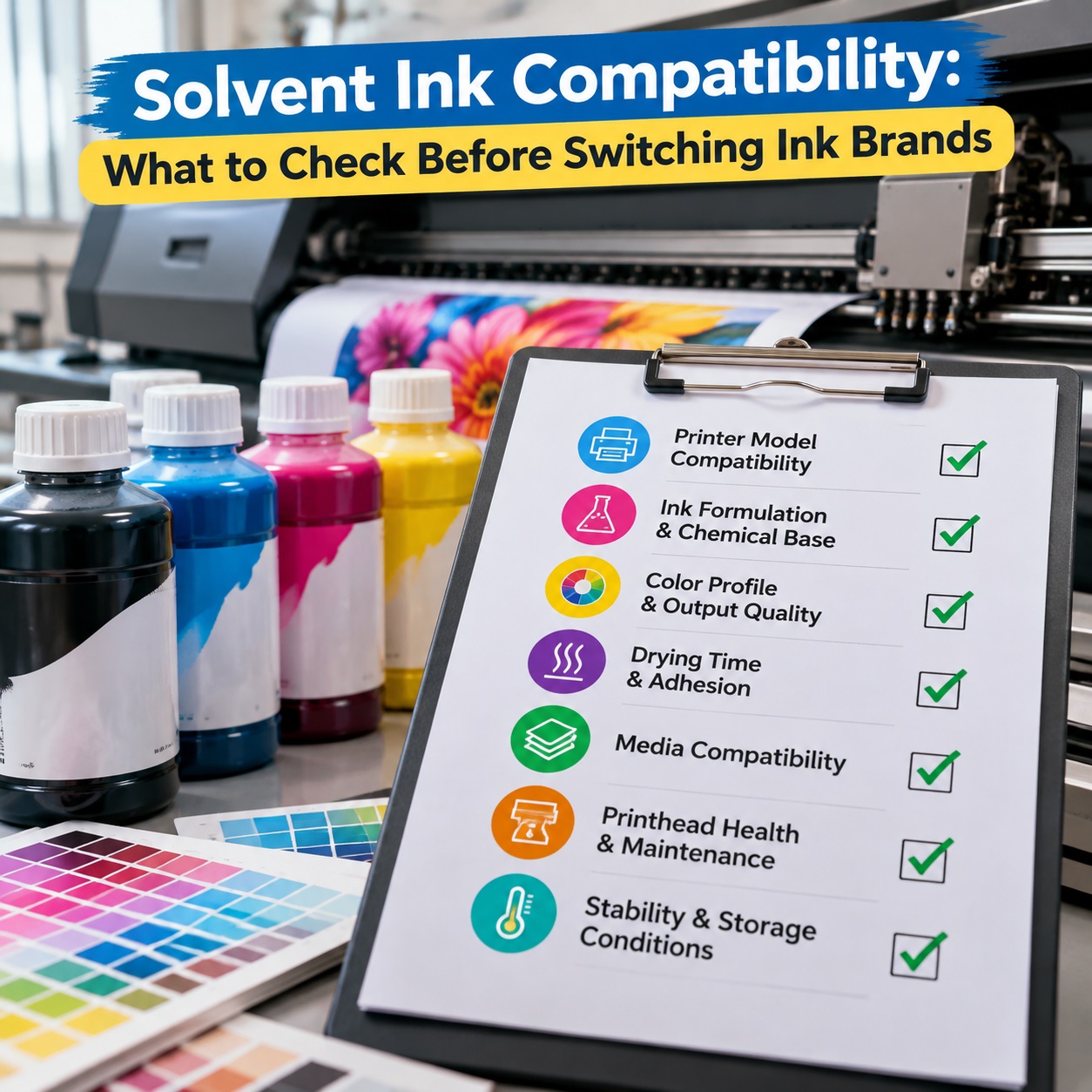
Solvent Ink Compatibility: What to Check Before Switching Ink Brands


Buying UV InkA cheaper solvent ink can be the most expensive thing you ever put in your printer.

I have watched a sign shop save thirty-eight dollars a liter and spend four thousand two hundred replacing a printhead six weeks later. The ink was not necessarily bad. The switch was. Compatibility is not a checkbox on a spec sheet. It is a chain of chemical, mechanical, and workflow decisions that either hold together or fail inside your machine.

Start With the Printhead, Not the Price List

Your printhead is the first thing that will tell you the truth. Solvent inks differ in viscosity, surface tension, particle size, and how aggressively they attack the internal coatings and adhesives inside a piezo head. Two inks can both be called eco-solvent and still behave nothing alike. If your printhead is under warranty, find out exactly what third-party ink does to that warranty. Some manufacturers will walk away the moment a non-approved cartridge or bulk ink hits the lines. Ask the ink supplier for a printhead compatibility list that names your exact model, not a vague family name. If they cannot produce one, that is not a technical gap. That is a warning.

Look at the Whole Ink Path

The printhead gets the attention, but the ink travels through tubing, dampers, O-rings, filters, capping stations, wipers, and pumps before it ever reaches a nozzle. A new solvent blend can swell a tube, harden a wiper, or soften a damper. The printer may run beautifully for a week and then start dropping pressure because a five-dollar part failed. Ask what materials the ink is compatible with and what the supplier recommends for replacement intervals. If you are switching from a mild eco-solvent to a more aggressive solvent, expect more maintenance, not less. That cost belongs in your calculation.

The Solvent Package Is the Fingerprint

Eco-solvent, low-solvent, true solvent, mild solvent. These labels are marketing shorthand, not chemistry. What matters is the actual solvent package: evaporation rate, flash point, odor, and how the ink cures on your substrate. A fast solvent might dry before it causes smudging, but it can also dry in the nozzles during a short pause. A slow solvent might keep the head clean but force you to slow the printer down or add dryer capacity. Check your ventilation, your shop temperature, and your typical print speed. An ink that works in a climate-controlled production room may fail in a garage with the door open.

Resin and Pigment Decide What Happens After the Print Leaves the Printer

Adhesion is only the beginning. You also need flexibility, scratch resistance, chemical resistance, and outdoor durability. A banner ink that passes a tape test may still crack when it is folded. A vehicle wrap ink may look fine until it meets a pressure washer. Ask for test data on the exact substrates you use most: uncoated vinyl, banner, backlit film, canvas, rigid board. Then test it yourself. Do not assume that because an ink is compatible with your printer, it is compatible with your customer’s expectations.

Do Not Mix Old and New Ink Unless the Supplier Puts It in Writing

Even when two inks are described as compatible, mixing them can cause gelling, sediment, or nozzle clogs. The safe move is to flush the system completely, replace filters, and start fresh. Get the supplier’s recommended flush procedure in writing. Some inks require a specific cleaning solution, not a generic one. Some require multiple flushes with a dwell time. If you skip that step, you may blame the new ink for a problem you created during the changeover.

Color Is Not Plug-and-Play

A new ink brand will almost always shift your color. It may have a wider gamut, a narrower gamut, or a different gray balance. Your old ICC profiles are now guesswork. You will need to linearize, re-profile, and check ink limits. Budget time, media, and a color management person if you do not do it in-house. If you print brand colors or contract proofs, run those first. A slight red shift that nobody notices on a banner can become a rejected job on a retail display.

Run a Real Trial, Not a Nozzle Check

A nozzle check proves the head fires. It does not prove the ink works. Run a trial on one printer, or one ink channel if you can isolate it. Flush according to the supplier’s instructions. Change filters. Fill with new ink. Then print daily nozzle checks for at least a week. Print test charts. Measure color. Test adhesion with tape, scratch, water, abrasion, and UV if possible. Track nozzle dropout, drop volume, filter pressure, and waste ink. Keep a log. If the ink fails, you want data, not a feeling.

Ask the Supplier the Uncomfortable Questions

A good ink supplier will welcome a technical conversation. Ask for the technical data sheet, the safety data sheet, the compatibility matrix, the recommended flush, ICC profiles, and references from shops that run your printer model. Ask about batch-to-batch consistency, shelf life, storage temperature, and what happens if a batch is off. Ask who supports you when something goes wrong at 2 a.m. before a deadline. If the answers are vague, the price per liter is irrelevant. You are not buying ink. You are buying uptime.

Compare Cost per Sellable Print

The cheapest ink is rarely the cheapest decision. Add flushing solution, filters, downtime, wasted media, reprints, color profiling, service calls, and the risk of a printhead replacement. Divide that by the number of sellable prints you produce. That number is the only one that matters. A slightly more expensive ink that runs clean for months can beat a bargain ink that costs you one reprint a week.

Plan the Switch Like a Production Change

Do not switch on a Friday before a major job. Do not switch every printer at once. Start with one machine. Label the tanks. Train the operators. Update the RIP. Keep a rollback plan. Document what you changed and when. If something goes wrong, you want to isolate the ink as a variable, not wonder whether it was the profile, the media, or the weather.

The right solvent ink brand does more than match your printer. It matches your substrates, your customers, your workflow, and your tolerance for risk. If a supplier hands you a compatibility sheet and offers to help with the trial, that is a good sign. If they just quote a price per liter and wish you luck, keep your old ink in the machine a little longer.

Experienced Tailors Combine Fine Stitching With Modern Design Sensibilities

Exceptional tailoring brings together traditional craftsmanship and contemporary creativity to produce clothing that feels comfortable, looks elegant, and reflects individual style. Experienced tailors understand how precise stitching, thoughtful fabric selection, and modern design details can transform garments into beautifully finished pieces. Their expertise helps create clothing that balances timeless appeal with fresh fashion ideas, making everyday outfits and special occasion ensembles feel more distinctive and refined.

Fine Stitching Creates A Superior Finish

Careful stitching is fundamental to well-crafted clothing. Experienced tailors pay attention to seam alignment, thread quality, and finishing techniques to ensure that every detail contributes to the garment’s overall appearance. Their precision creates clean lines and a polished finish that complements different clothing styles.

  • Neat Seams: Create a clean, professional appearance.
  • Consistent Stitches: Support attractive garment construction.
  • Secure Finishing: Helps maintain dependable quality.
  • Balanced Hems: Provide a refined final touch.
  • Careful Detailing: Enhances the garment’s character.

Modern Designs Inspire Creative Tailoring

Contemporary fashion encourages fresh silhouettes, interesting proportions, and thoughtful decorative elements. Skilled tailors combine these ideas with established sewing techniques to create garments that feel current while maintaining excellent craftsmanship.

Design Elements That Make A Difference

Modern tailoring celebrates individuality through carefully selected details and balanced construction. These features allow clothing to feel distinctive without losing the elegance and versatility that make well-designed garments appealing.

  • Clean Silhouettes: Create a sophisticated appearance.
  • Contemporary Cuts: Introduce fresh visual proportions.
  • Refined Collars: Add character to shirts and jackets.
  • Stylish Cuffs: Provide subtle design interest.
  • Elegant Finishes: Bring every detail together.

Fabric Knowledge Supports Better Results

Understanding different fabrics helps experienced tailors select suitable stitching methods and construction techniques. Cotton, linen blends, wool, and other quality materials each have distinctive textures and characteristics that influence how a garment fits and drapes.

Choosing the right approach helps preserve the material’s natural qualities while creating comfortable, attractive clothing.

  • Soft Cotton: Supports comfortable everyday garments.
  • Lightweight Linen Blends: Offer an airy wearing experience.
  • Structured Wool: Helps create elegant formal silhouettes.
  • Smooth Textures: Contribute to a refined finish.
  • Quality Threads: Complement durable garment construction.

Personalized Fits Enhance Individual Style

Every person has unique preferences regarding garment length, shape, and comfort. Experienced tailors use accurate measurements and careful adjustments to create clothing that reflects those preferences while maintaining balanced proportions.

Tailoring Adjustments For Everyday Elegance

Small refinements can make a significant difference in how clothing looks and feels. Personalized alterations also help individuals enjoy greater versatility from their existing wardrobe.

  • Adjust sleeves for comfortable, balanced proportions.
  • Refine waistlines for a flattering silhouette.
  • Shorten trousers to achieve a neat finish.
  • Shape shirt sides for a cleaner appearance.
  • Improve jacket fits for polished presentation.

Craftsmanship Encourages Lasting Wardrobe Value

Thoughtful construction and proper garment care help clothing remain attractive through regular use. Skilled tailors can reinforce seams, replace buttons, and make suitable adjustments that keep favorite pieces functional and stylish.

These services encourage a more considered approach to fashion by helping individuals maintain garments they genuinely enjoy wearing.

Traditional Skills Meet Contemporary Fashion

Experienced tailors demonstrate how fine stitching and modern design sensibilities work beautifully together. Through technical precision, fabric knowledge, creative thinking, and personalized fitting, they transform clothing into expressions of confidence and individuality. Their craftsmanship supports comfort, elegance, and versatility, helping people enjoy garments that suit their preferences while celebrating the enduring value of well-made fashion.

Michael Tailors
Phone: +66827318786
Url: https://michaeltailors.com/
Room 1D-09, End of zone – D, G-floors, Mbk center
PathumWan, Bangkok 10330

Stroller Brands Make Outdoor Time More Comfortable For Families

Outdoor time becomes more enjoyable when families have comfortable and practical equipment for their little ones. Stroller brands focus on thoughtful designs that support smooth movement, cozy seating, convenient storage, and easy handling. These useful qualities can help parents feel prepared while creating pleasant experiences for babies during everyday outdoor activities.

Comfortable Seating Supports Relaxed Adventures

A supportive stroller gives babies a comfortable space to rest while families enjoy time outdoors. Thoughtful seating features can help maintain comfort during short walks and longer outings, making outdoor activities more enjoyable for everyone.

  • Cushioned seats provide a pleasant resting space
  • Adjustable positions support different comfort preferences
  • Soft materials create a cozy environment
  • Protective canopies provide useful coverage
  • Supportive designs encourage relaxed outdoor time

Smooth Movement Makes Outdoor Travel Easier

Easy movement is especially valuable when families spend time outside. Strollers with practical handling features can help parents navigate comfortably while keeping outings enjoyable and convenient.

  • Smooth wheels support comfortable movement
  • Responsive steering makes handling easier
  • Stable frames encourage confident navigation
  • Lightweight designs simplify transportation
  • Reliable movement supports relaxed family outings

Convenient Storage Keeps Essentials Close

Outdoor activities often involve carrying snacks, clothing, toys, and other baby essentials. Useful storage areas allow parents to organize these belongings conveniently while keeping important items accessible throughout the outing.

  • Spacious baskets provide room for essentials
  • Accessible pockets keep smaller items nearby
  • Secure compartments support better organization
  • Extra storage helps accommodate changing needs
  • Convenient access makes outings more efficient

Flexible Features Support Growing Babies

Babies grow quickly, and their comfort requirements can change over time. Adaptable stroller features can help families maintain comfortable routines while providing useful support through different stages of development.

  • Adjustable seating supports changing preferences
  • Reclining options encourage comfortable rest
  • Flexible handles can improve parent comfort
  • Adaptable designs suit different activities
  • Convenient adjustments support everyday routines

Durable Construction Encourages Confident Use

A dependable stroller can become a valuable part of regular family life. Strong construction and practical materials can support frequent outdoor use while helping parents feel confident about comfort and convenience during different activities.

  • Durable frames support repeated outings
  • Reliable wheels encourage steady movement
  • Quality materials provide lasting usefulness
  • Strong designs support active family routines
  • Thoughtful construction improves everyday convenience

Thoughtful Choices Make Outdoor Time Better

Families can explore useful baby-care information when considering features that match their daily routines. Resources such as https://www.riverbabygroup.com/de/ can help parents learn more about practical baby products and discover qualities that may support comfortable outdoor experiences. Overall, stroller brands make outdoor time more comfortable by combining supportive seating, smooth handling, practical storage, flexible features, and durable construction. These qualities help parents stay organized while giving babies a pleasant space to relax. With a suitable stroller, everyday walks and family adventures can become more comfortable, convenient, and memorable.

Reliable Equipment Integration From Industrial Automation Companies

Reliable equipment integration helps manufacturers create coordinated, efficient, and productive operations. When machines, sensors, control systems, and production equipment work together smoothly, businesses can achieve consistent results while making better use of available resources. Industrial automation companies support this progress by developing practical integration strategies that connect individual equipment components into unified production systems.

Building Strong Equipment Connections

Successful integration begins with understanding how each machine contributes to the overall production process. Proper planning helps equipment communicate effectively, maintain consistent performance, and support changing operational requirements.

Important integration priorities include:

  • Seamless connectivity: Establish dependable connections between equipment components.
  • Accurate communication: Enable consistent information exchange across connected machines.
  • Flexible configurations: Support different production requirements with adaptable arrangements.
  • Reliable performance: Maintain smooth coordination throughout daily operations.
  • Simplified maintenance: Make equipment inspection and servicing more convenient.

These measures create a strong foundation for dependable production and long-term operational improvements.

Improving Production Efficiency

Well-integrated equipment allows production teams to coordinate activities with greater precision. Automated processes can reduce repetitive manual tasks while helping operators maintain consistent output and improve workflow visibility.

With suitable integration planning, manufacturers can benefit from:

  • Faster coordination between production stages.
  • Better synchronization of machine operations.
  • More consistent product quality.
  • Improved use of production resources.
  • Greater flexibility when adjusting workflows.
  • Enhanced visibility into equipment performance.

These advantages help create organized manufacturing environments where every component contributes to the overall production objective.

Choosing Suitable Integration Solutions

Selecting compatible equipment and dependable components is essential for achieving reliable results. Manufacturers can explore available technical resources and integration possibilities, including those presented through https://www.omch.com/es/, when considering suitable components for their operational requirements.

A thoughtful selection process should consider several important factors:

  • Compatibility: Confirm that equipment components support the required connections.
  • Scalability: Choose arrangements that can accommodate future production expansion.
  • Operational simplicity: Prioritize configurations that are easy to understand and manage.
  • Durability: Consider components designed for dependable industrial operation.
  • Integration support: Seek clear technical guidance during planning and implementation.

Careful evaluation encourages informed decisions and helps manufacturers develop systems that support present needs while remaining adaptable for future improvements.

Strengthening Quality and Consistency

Reliable equipment integration also contributes to consistent manufacturing standards. Coordinated machines can perform assigned tasks with greater repeatability, helping production teams maintain established specifications throughout different stages.

Key quality-focused benefits include:

  • Consistent process timing.
  • Precise equipment coordination.
  • Repeatable production results.
  • Improved inspection routines.
  • Better monitoring of operating conditions.
  • More organized quality management.

When equipment functions as a coordinated system, manufacturers can establish dependable workflows and create greater confidence in their production outcomes.

Supporting Long-Term Operational Growth

Effective integration is an ongoing process that benefits from regular evaluation, preventive maintenance, and thoughtful upgrades. Reviewing equipment performance helps teams identify opportunities to improve connectivity, refine production sequences, and maintain operational reliability.

Manufacturers can encourage lasting success by documenting configurations, training operators, scheduling routine inspections, and evaluating changing production needs. These practices help preserve equipment performance while supporting continuous improvement.

Conclusion

Reliable equipment integration creates a valuable foundation for modern manufacturing success. Through compatible components, coordinated workflows, careful planning, and consistent maintenance, industrial automation companies help businesses improve efficiency, strengthen quality, and support flexible production. A well-integrated system enables equipment to work together effectively, creating productive operations that are prepared for continued growth and evolving manufacturing demands.